The Future of Technology
is Still Trapped in the Past
We are preparing for machines that might surpass human intelligence while giving them the working conditions of an administrative assistant. How did we become so adventurous about what technology could do, and so conventional about what we might do with it? Elsewhere, storms become music and a passerby changes the rules of a miniature ecosystem. A different future comes into view once we embrace how technology makes the world more available to our senses, our curiosity, and our intervention.
Boredom is an odd quality to cultivate in a machine, particularly one you hope to sell as entertainment. In the 1950s, Gordon Pask and his collaborators built Musicolour, which listened to a musician and returned the performance in colored light. Then the light began to find its way into the music. Watching the display, the player could follow an unexpected effect, alter a phrase, discover something worth pursuing. Pask became fascinated by this exchange. The machine was giving the musician access to effects that neither the instrument nor the playing alone could produce. But a discovery could become a habit, and Musicolour had little patience for those. Repetition could make its response fade into darkness. A musician trying to draw it back had to depart from the familiar phrase—and might find, in the attempt, something they had never intended to play.
Seventy years later, this seems an almost impolite arrangement. Our machines are supposed to accommodate us, anticipate us, remove the effort from whatever we had intended to do. We describe an image; an image appears. We request a presentation; the slides assemble themselves. These are extraordinary capabilities. The curious part is how ordinary our ambitions for them remain. We are preparing for machines that might surpass human intelligence while giving them the working conditions of an administrative assistant. Somewhere in this discrepancy is a question that interests me more than whether the next system will be cleverer: how did we become so adventurous about what technology could do, and so conventional about what we might do with it?
These are extraordinary capabilities. The curious part is how ordinary our ambitions for them remain. We are preparing for machines that might surpass human intelligence while giving them the working conditions of an administrative assistant.
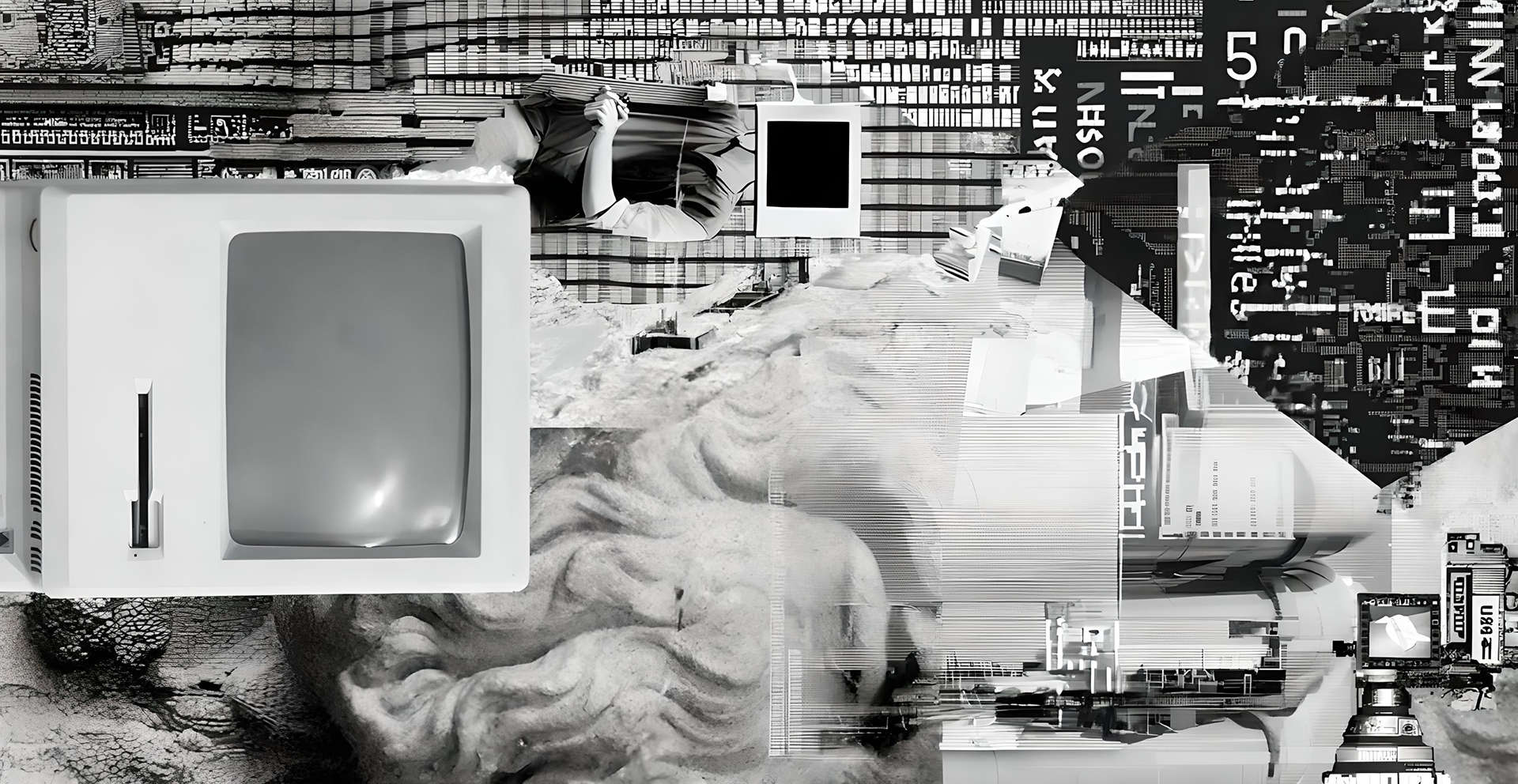
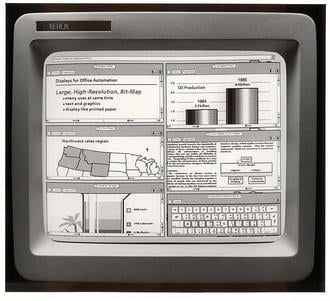
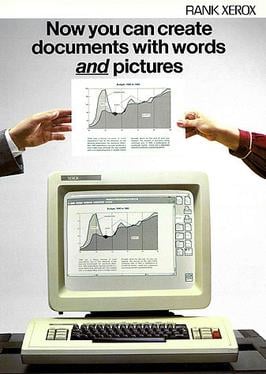
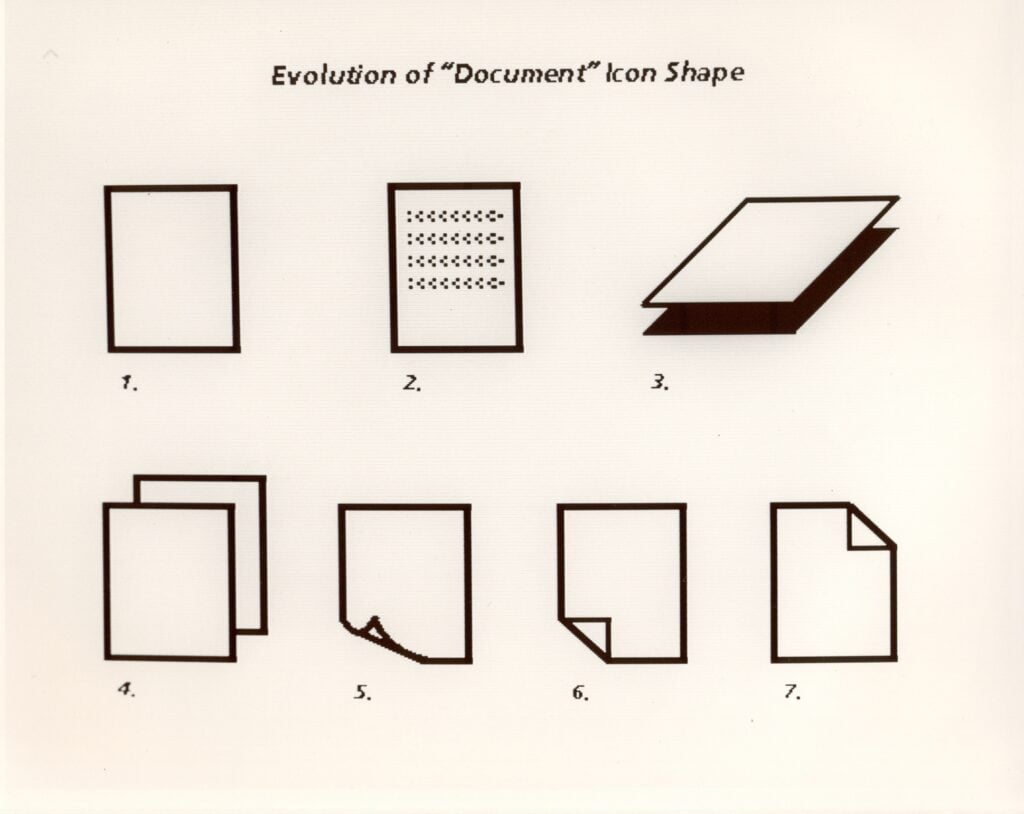
The working conditions have a history. When Xerox introduced the Star workstation in 1981, its designers gave office workers a familiar place to begin: a desktop with documents, folders, and trays. People could bring what they already knew into an encounter with something unfamiliar. The office subsequently followed us almost everywhere. We compose music, investigate ecosystems, and imagine new worlds inside its descendants. Even the announcement that everything is about to change tends to arrive as an office briefing. We present the arrival of superintelligence much as we would the quarterly results: a sequence of slides, an audience following the speaker’s argument. The ambitions have grown considerably; the meeting proceeds much as before.
We ask new technology to take over these familiar assignments, then judge it by how quickly it finishes them. In the process, we have narrowed our idea of progress to getting more done. We count the hours saved, the tasks automated, the images produced, and rarely stop to question what all this activity is for. A machine that accelerates familiar work needs little justification. An experiment that changes our understanding of the work has to plead its case. That seems a strange bargain for a culture so pleased with its appetite for invention.
We keep promising to close the gap between an idea and its execution, as though nothing worth keeping happens in between. But working on an idea can change what we want to make. Sometimes we discover that the thing we set out to do was the least interesting possibility. Andrea Polli began by wondering what chaos theory might sound like. She wrote software that turned mathematical behavior into musical improvisation. A conversation with a meteorologist took her further into the atmospheric models behind the mathematics, and their collaboration eventually brought two historic storms into a sixteen-speaker installation in a former Manhattan firehouse. Her later Particle Falls moved outside: a waterfall of light projected onto a building, interrupted by bright bursts as a nearby instrument registered airborne particles. A question about sound had led her to the air people were breathing. The image changed with that air. There was no finished waterfall to deliver, approve, and file away.
I want that latitude when I work with technology. I want to change what a system responds to, interfere with its behavior, follow an unexpected result beyond the task that produced it. A rule, a process, a stream of measurements can become material to work with. The hacker approaches a device with much the same curiosity. Its manufacturer has supplied an account of what the thing is for; someone opening the case suspects that account is incomplete. There is pleasure in proving it, but also a claim to authorship. The person who bought the machine gets to have an idea its maker did not anticipate. That claim becomes harder to exercise when the machinery disappears behind a service. We can ask for an extraordinary range of results without gaining much access to the system producing them. So we refine the request, learn its preferences, discover which formulations it rewards. Eventually, we become quite skilled at accommodating the machine that was supposed to accommodate us. The range of available outputs may keep growing while our part in the arrangement stays much the same. We learn to want what the interface knows how to offer.
A machine that accelerates familiar work needs little justification. An experiment that changes our understanding of the work has to plead its case. That seems a strange bargain for a culture so pleased with its appetite for invention.
For a company, this can be an excellent arrangement. It can sell greater speed, better results, more choices, while retaining control over what customers can inspect or change. The trouble begins when we treat the success of that product as evidence that it represents the natural direction of technology. An experiment whose benefits emerge slowly, or belong to a community rather than an individual purchaser, faces a different reception. Someone has to explain who will pay for it. That is a reasonable question for a business and a poor final judgment on a possibility. Some futures become difficult to imagine because we have become so practiced at explaining why they will not sell.
Others become difficult to discuss because they sound unfashionable. When I bring up cybernetics with AI researchers, I am sometimes surprised by how quickly they dismiss it. The word seems to settle the matter before its questions receive much attention. Those questions concern how systems respond to their surroundings and change through their interactions—precisely the territory that interests me. We have made the individual machine vastly more capable. I see no reason to become less curious about what happens between that machine, a person, and the world they share. Yet the desktop can survive for half a century without much embarrassment, while an unfinished intellectual project acquires the air of a historical mistake. Our accounts of AI tend to give the machine the more interesting future. It may develop intentions, acquire autonomy, reorganize civilization. We have imagined its possible independence in extraordinary detail. Human beings often receive a thinner part: we become more productive, enjoy the convenience, perhaps struggle to remain useful. In the catastrophic version, we disappear altogether. There is serious work applying AI to scientific and environmental problems, but I remain struck by the difference in imaginative scale. We readily picture intelligence growing powerful enough to make us irrelevant. We seem less certain what to do with it when we intend to remain involved.
I would like more of that imagination directed toward the things we struggle to perceive and understand together. We already know how to hear strain in a voice, follow several rhythms, feel a material begin to give. Our encounters with complex systems make surprisingly little use of that experience. A chart may contain everything its author intended to communicate and still leave someone unable to grasp what is happening. Polli’s work interests me partly because it allows the atmosphere to enter perception through another door. There are other doors, and an enormous world outside them. Opening them would give artists and designers considerable responsibility. An ordinary fluctuation can sound ominous if someone chooses the wrong correspondence; a beautiful image can lend authority to a poor interpretation. I would want those choices within reach. If a system helps people understand the conditions in which they live, they should be able to question how it describes those conditions, bring their own knowledge to it, and try a different account. The technology becomes more interesting as people gain ways to participate in its understanding of the world.
This is what draws me to the possibility of an interface that borrows more from a nervous system than from an office. It could help us sense changes around us and discover where we might intervene. Its usefulness would depend on the relationships people could build through it, including relationships with people who know different things. There would be arguments, revisions, discoveries that complicated the original task. We might finish with a better question and more work to do. By the measures we so often use to sell technology, that could look like a disappointing result.
The musician at Pask’s machine would presumably have understood. We have become remarkably good at producing what we already know how to request. I want to leave more room for the encounter that changes the request, or makes it seem inadequate. An image can arrive in seconds. A new way of seeing may take longer, and leave us with more to do. I would hate to mistake that for inefficiency.