What is Interaction?
Data-Design Dictionary
A dictionary to illuminate data-driven generative design and creative coding.
Interaction describes the exchange between a system and something that affects or responds to it. In design, this usually refers to the way people engage with interfaces, objects, spaces, or media. More broadly, however, interaction can also describe the relationship between a design system and its environment, its data sources, or other dynamic forces that influence how it behaves over time.
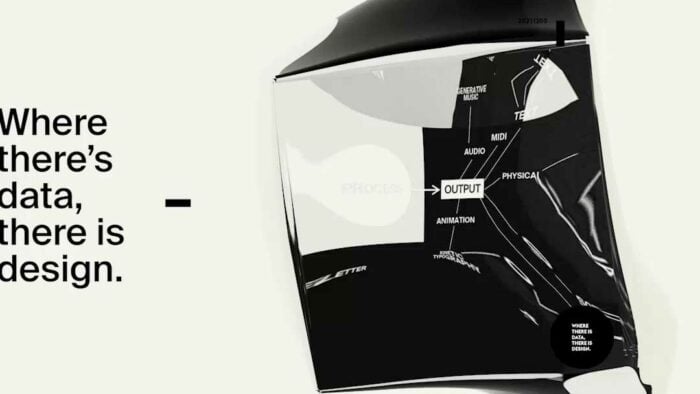
In the context of generative and data-driven design, interaction is not only a matter of usability or response. It becomes a way of shaping form, meaning, and experience through participation, feedback, and change. A system may respond to human input, environmental conditions, movement, sound, behavior, or other signals that enter the design process and alter the resulting output. In this sense, interaction is not simply added to design after the fact. It can become one of the core forces that generates design in the first place.
Hover over elements to learn more. Click-and-drag elements to move them around.
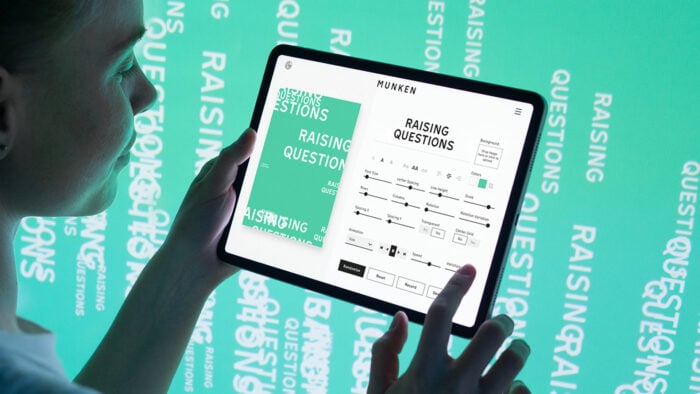
This makes interaction especially important for generative branding and communication design. Here, identity is no longer limited to a fixed visual artifact, but can unfold as something responsive and alive. Through interaction, a brand system can react to audiences, contexts, events, or real-time data in ways that make communication more engaging, adaptive, and meaningful. The result is not only a more dynamic experience, but a stronger relationship between system, expression, and audience.
Interaction also changes the role of the designer. Rather than fully determining every outcome in advance, the designer defines the framework within which responses, behaviors, and exchanges can take place. This shifts design from the creation of singular finished forms toward the shaping of conditions for emergence, participation, and co-creation. In this context, interaction is a generative relationship between input, system, and output that can turn design into an active process of exchange.