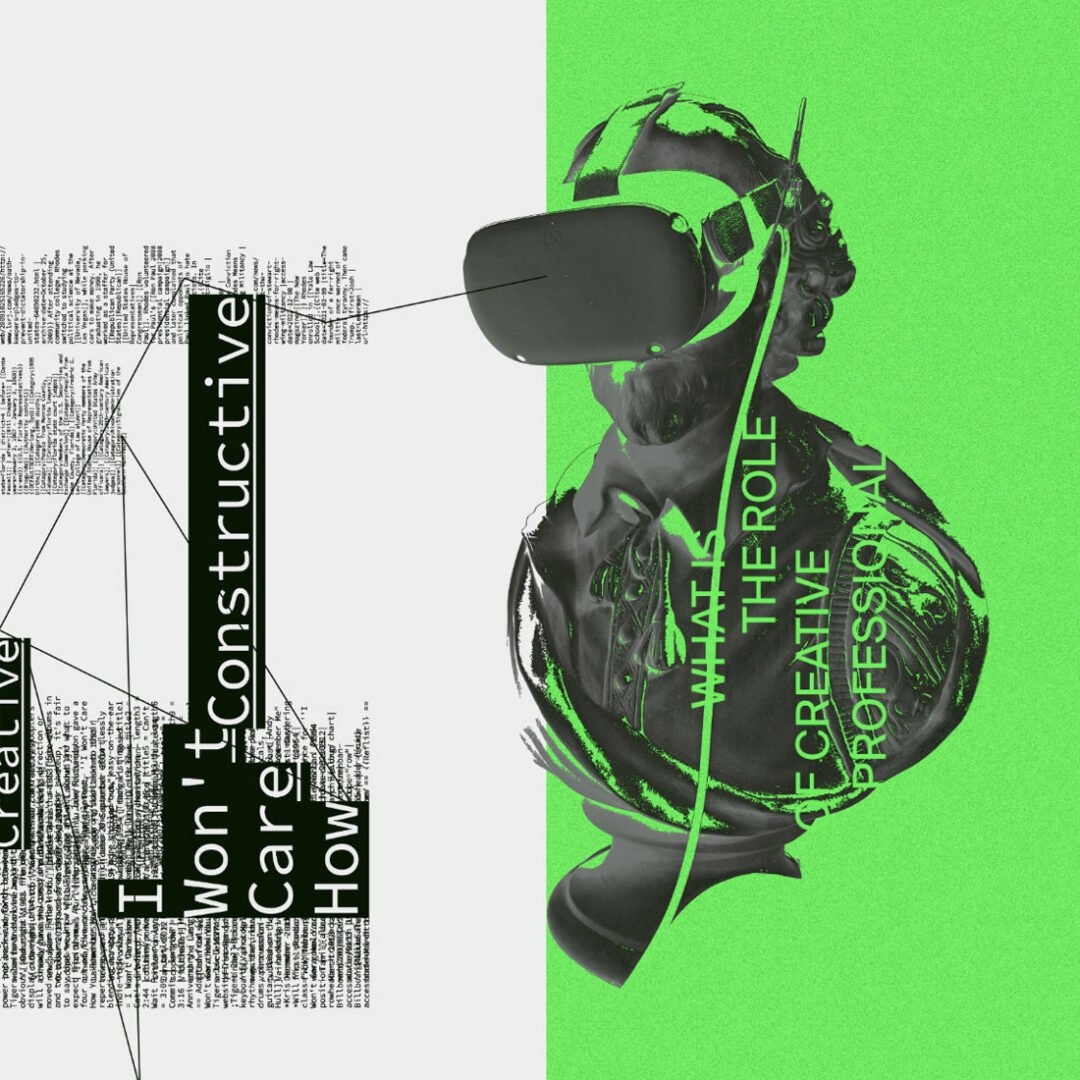
A Creative Technologist is a designer, thinker, and maker who works at the intersection of creativity and technology in order to develop new forms of expression, interaction, and communication. Rather than treating technology as a purely functional tool, the Creative Technologist approaches it as a creative material that can be shaped, questioned, and directed through design.
In the context of data-driven communication design and generative branding, a Creative Technologist helps turn ideas, stories, and strategies into systems. This can involve working with code, data, interaction, automation, and emerging technologies to build visual identities, experiences, and design processes that are adaptive, responsive, and alive. The role is not limited to implementation. It also includes framing the right questions, understanding context, defining meaningful inputs, and shaping the logic through which form can emerge.
Map of relevant entites and relationships
{
“nodes”: [
{ “id”: 1, “label”: “Creative Technologist”, “title”: “A creative practitioner who combines design, systems thinking, and technology to shape new forms of expression, interaction, and communication.” },
{ “id”: 2, “label”: “Generative Design”, “title”: “A design approach in which rules, systems, and data shape multiple coherent outputs.” },
{ “id”: 3, “label”: “Creative Coding”, “title”: “The use of code as a medium for open-ended visual and conceptual exploration.” },
{ “id”: 4, “label”: “Systems Thinking”, “title”: “A holistic way of understanding relationships, structures, and dynamics within a larger whole.” },
{ “id”: 5, “label”: “Data”, “title”: “Quantitative or qualitative information that can serve as material, input, or context for design.” },
{ “id”: 6, “label”: “Storytelling”, “title”: “The narrative dimension that gives design emotional relevance, meaning, and direction.” },
{ “id”: 7, “label”: “Interaction”, “title”: “The relationship between user, system, and environment through participation, response, or feedback.” },
{ “id”: 8, “label”: “Technology”, “title”: “Digital or computational means that can be used, shaped, and directed within a creative process.” },
{ “id”: 9, “label”: “Brand Systems”, “title”: “Flexible identity frameworks that allow a brand to express itself coherently across changing contexts.” },
{ “id”: 10, “label”: “Automation”, “title”: “The delegation of tasks or processes to systems, programs, or machines.” },
{ “id”: 11, “label”: “Human Judgment”, “title”: “The critical, aesthetic, and ethical decisions that guide a creative process.” },
{ “id”: 12, “label”: “Context”, “title”: “The cultural, environmental, social, or situational conditions that shape meaning.” },
{ “id”: 13, “label”: “AI & Machine Learning”, “title”: “Computational systems that can assist pattern recognition, generation, and decision-making.” },
{ “id”: 14, “label”: “Future Aesthetics”, “title”: “Design approaches that explore how present and future conditions can be expressed through form.” }
],
“edges”: [
{ “from”: 1, “to”: 2, “label”: “Applies” },
{ “from”: 1, “to”: 3, “label”: “Works with” },
{ “from”: 1, “to”: 4, “label”: “Builds on” },
{ “from”: 1, “to”: 5, “label”: “Uses” },
{ “from”: 1, “to”: 6, “label”: “Shapes” },
{ “from”: 1, “to”: 7, “label”: “Designs” },
{ “from”: 1, “to”: 8, “label”: “Engages with” },
{ “from”: 1, “to”: 9, “label”: “Creates” },
{ “from”: 1, “to”: 10, “label”: “Directs” },
{ “from”: 1, “to”: 11, “label”: “Guided by” },
{ “from”: 1, “to”: 12, “label”: “Responds to” },
{ “from”: 1, “to”: 13, “label”: “Incorporates” },
{ “from”: 1, “to”: 14, “label”: “Contributes to” },
{ “from”: 2, “to”: 9, “label”: “Enables” },
{ “from”: 5, “to”: 6, “label”: “Informs” },
{ “from”: 12, “to”: 6, “label”: “Shapes” },
{ “from”: 11, “to”: 10, “label”: “Balances” },
{ “from”: 13, “to”: 8, “label”: “Extends” }
]
}
This map is interactive.
Hover over elements to learn more. Click-and-drag elements to move them around.
A Creative Technologist therefore operates beyond the traditional separation of concept and execution. Instead of simply producing isolated design artifacts, they help create the conditions under which a wide range of coherent and meaningful outputs can evolve. This makes the role especially relevant in generative design, where storytelling, systems thinking, data, and technology come together to form new possibilities for branding, communication, and interaction.
Working in this way requires both curiosity and judgment. The Creative Technologist must understand how technologies work, but also why and where they should be used. In that sense, the role is not about novelty for its own sake. It is about using technology to create new relationships between form, meaning, context, and audience.
The bigger picture of designing and branding with data: